March 25th, 2026 | Industry Insights
The GCC region has undergone rapid transformation—economically, socially, and now agriculturally. As the region continues to diversify and strengthen its key sectors, attention is increasingly turning toward food production and sustainability.
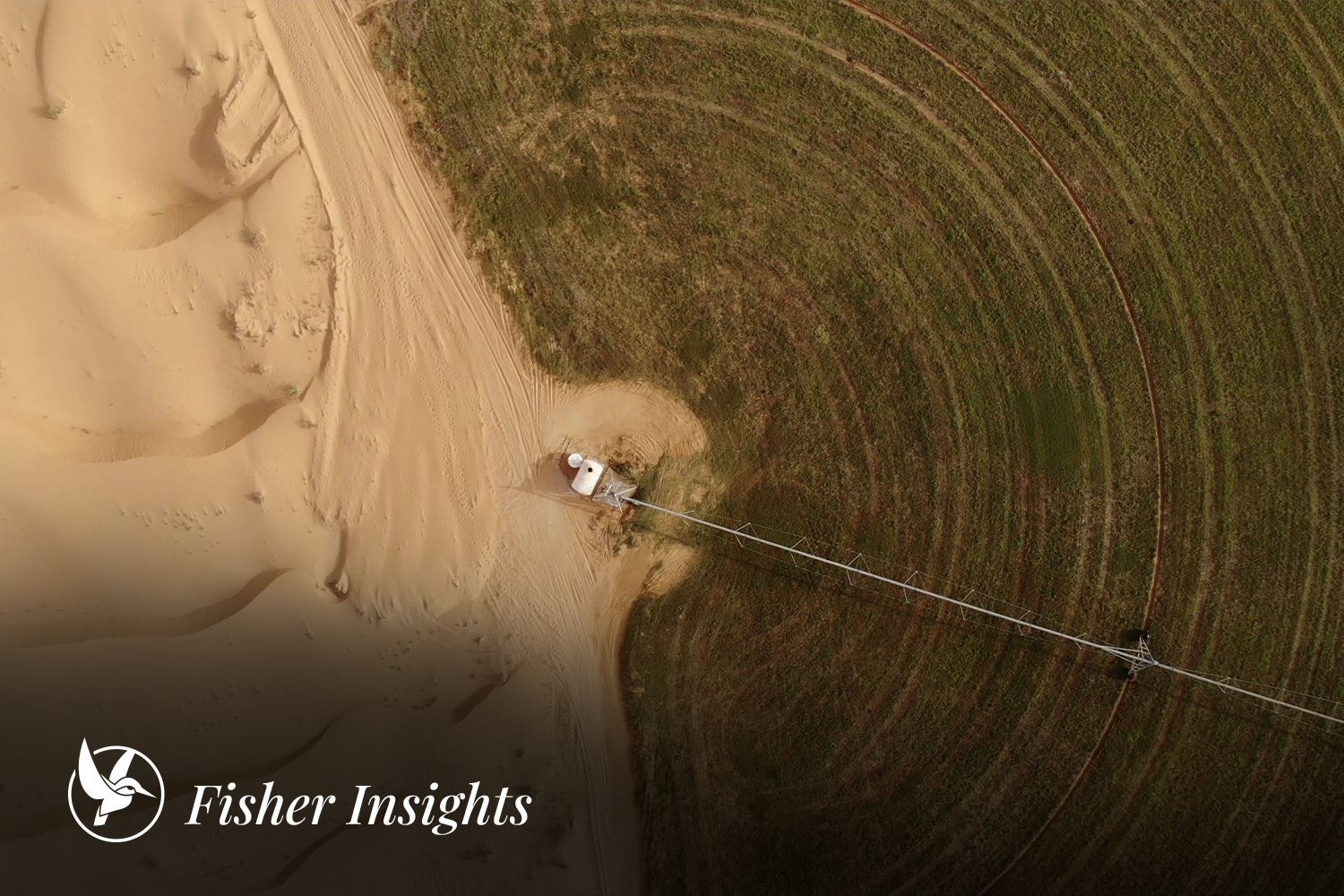
Historically, agriculture has struggled to take root. As highlighted in the GCC Agriculture Sector Outlook (n.d.), “Agriculture is challenging for GCC nations due to their marginal environments characterized by poor soil quality, high temperatures, and low annual rainfall.” Yet, today, backed by innovation and strategic investment, agricultural development in the region has become a strategic priority and central to long-term resilience.
With this shift, professional opportunities are expanding across the sector. This article explores the evolving agricultural landscape in the GCC, and the opportunities emerging alongside it.
Government-Led Transformation
With the right care and attention, all plants grow and bloom. In much the same way, the GCC’s increased focus on agriculture—paired with government-led reforms and the dedication of engineers, scientists, and food technology experts—has placed the sector on a steady upward trajectory.
Across the region, national strategies are driving this momentum. As highlighted in the GCC Agriculture Sector Outlook (n.d.), Saudi Arabia’s Vision 2030 focuses on reducing food waste and promoting resource-efficient farming, while Oman’s Vision 2040 aims to diversify agricultural production and expand the use of treated wastewater for irrigation. Similarly, Bahrain and Kuwait are advancing sustainability and increasing sector output through their long-term development strategies.
These efforts are already translating into tangible growth. According to the Statistical Centre for the Cooperation Council for the Arab Countries of the Gulf, the agriculture and fisheries sector contributed approximately $40 billion to the GCC’s GDP in 2024, reflecting a 5.1 percent increase compared to 2023 (Trends MENA, 2026). Together, these developments signal a clear shift: agriculture in the GCC is no longer a limitation, but a sector being actively cultivated for long-term growth and resilience.
Agricultural Innovation in the GCC
Innovation is redefining what agriculture looks like across the GCC, with technology enabling production in environments once considered unviable. In Dubai, for example, what has been described as the “world’s largest vertical farm” produces over 900 tonnes of leafy greens annually, while using significantly less water than traditional field agriculture (World Economic Forum, 2022). In Saudi Arabia, Red Sea Farms—based at King Abdullah University of Science and Technology—has developed innovative methods to cultivate crops using seawater, offering a sustainable alternative to freshwater-dependent farming (Arab News, 2021).
Investment and Economic Opportunity
Across the region, food and agriculture technology has emerged as a key area of innovation, with over 1,300 Agri-tech startups now operating in the GCC (Tracxn, 2025). These startups indicate not only an economic interest in agriculture, but a desire to innovate beyond contemporary technologies.
This growth is being actively supported by targeted programmes and funding initiatives. As highlighted by the World Economic Forum (2025), GCC countries have introduced a range of projects designed to nurture and scale this ecosystem. In the UAE, the Ministry of Climate Change and Environment launched the Food and Agriculture Entrepreneurs Programme, alongside the AGRIX Accelerator by the Emirates Development Bank. Meanwhile, in Bahrain, NIAD established the King Hamad Prize for Agricultural Development to incentivize innovation and excellence in the sector.
Workforce and Skills Gap
To power these initiatives, there is a growing demand for specialized agricultural skills and talent across the region. In addition to traditional agricultural roles, which remain the foundation driving the sector, a new kind of work is emerging—one that merges agriculture with technology and drives innovation and efficiency. Traditional agricultural roles must be complemented by a new generation of expertise, ranging from agronomists and irrigation specialists to data analysts, environmental engineers, and food technology experts. Moreover, as the sector evolves, demand is rising for skills that combine agriculture with technology, sustainability, and engineering. Expertise in areas such as agri-tech, water management, and data-driven farming is becoming increasingly critical to the sector’s growth.
Your Strategic Partner
As the agricultural sector in the GCC continues to evolve, organizations will require the right structures, talent strategies, and capabilities to scale effectively. Through organizational structure and governance design, workforce planning and analytics, targeted training and development programs, and Recruitment Process Outsourcing (RPO), Fisher supports businesses in building resilient, future-ready teams equipped to meet the sector’s growing demands. As this sector grows, we empower you to grow alongside it.
What was once a constraint is now a catalyst—agriculture in the GCC is being reimagined for the future.
References
Arab News. (2021, July 31). Saudi startup Red Sea Farms uses seawater to grow crops. https://www.arabnews.com/node/1895431/middle-east
Gulf Research Center. (n.d.). GCC agriculture sector outlook. https://programs.grc.net/wp-content/uploads/2024/09/GCC-Agriculture-Sector-Outlook_2.pdf
Statistical Centre for the Cooperation Council for the Arab Countries of the Gulf. (2026). GCC agriculture sector posts strong 2024 performance. Trends MENA. https://trendsmena.com/economy/gcc-agriculture-sectors-post-strong-2024-performance/
Tracxn. (2025). Food and agriculture tech startups in GCC. https://tracxn.com/d/explore/food-and-agriculture-tech-startups-in-gcc/__E6xW4su1RP8EQicw5rl5dUcOMAte5BbEB5GXuU33pKE/companies
World Economic Forum. (2022, May). Vertical farming: The future of agriculture? https://www.weforum.org/stories/2022/05/vertical-farming-future-of-agriculture/
World Economic Forum. (2025, February). Gulf food security innovation. https://www.weforum.org/stories/2025/02/gulf-food-security-innovation/