Industry Insights | July 6, 2026
Development in the GCC is often symbolized by futuristic skylines, world-class infrastructure, and ambitious economic transformation. Yet beneath these achievements lies a far more fundamental resource that receives far less attention: water.
Despite being among the world's most water-scarce regions, Gulf economies have sustained growth through desalination, groundwater extraction, and large-scale investment in water infrastructure. Today, climate change, population growth, economic diversification, and rising industrial demand are placing unprecedented pressure on these systems. Water is no longer simply an environmental concern; it is strategic infrastructure that underpins economic resilience, industrial productivity, workforce stability, and business continuity.
As organizations expand across the region, resilience is no longer measured solely by financial performance or operational efficiency. It also depends on an organization's ability to anticipate and respond to resource-related risks that can affect its people, operations, and long-term growth.
The Challenge
The GCC is one of the world's most water-stressed regions, with renewable freshwater availability of less than 500 cubic meters per capita per year, well below the threshold for absolute water scarcity (Kearney, 2026). As governments diversify their economies and attract new industries, commercial and industrial water demand continues to rise, placing additional pressure on already limited resources.
In response, GCC countries are strengthening water resilience through greater investment in desalination, wastewater reuse, and renewable water sources. According to the GCC Statistical Center, annual groundwater extraction has declined by 3% over the past nine years, while renewable water sources accounted for 25.5% of the region's water mix in 2024, reflecting a broader shift toward long-term economic and operational resilience (Arab News, 2026).
These investments demonstrate a clear commitment by governments to safeguarding future growth. However, resilience cannot be driven by public infrastructure alone. Organizations must also recognize water as a strategic business asset and incorporate water-related risks into enterprise risk management and operational planning.
Business and Workforce Continuity
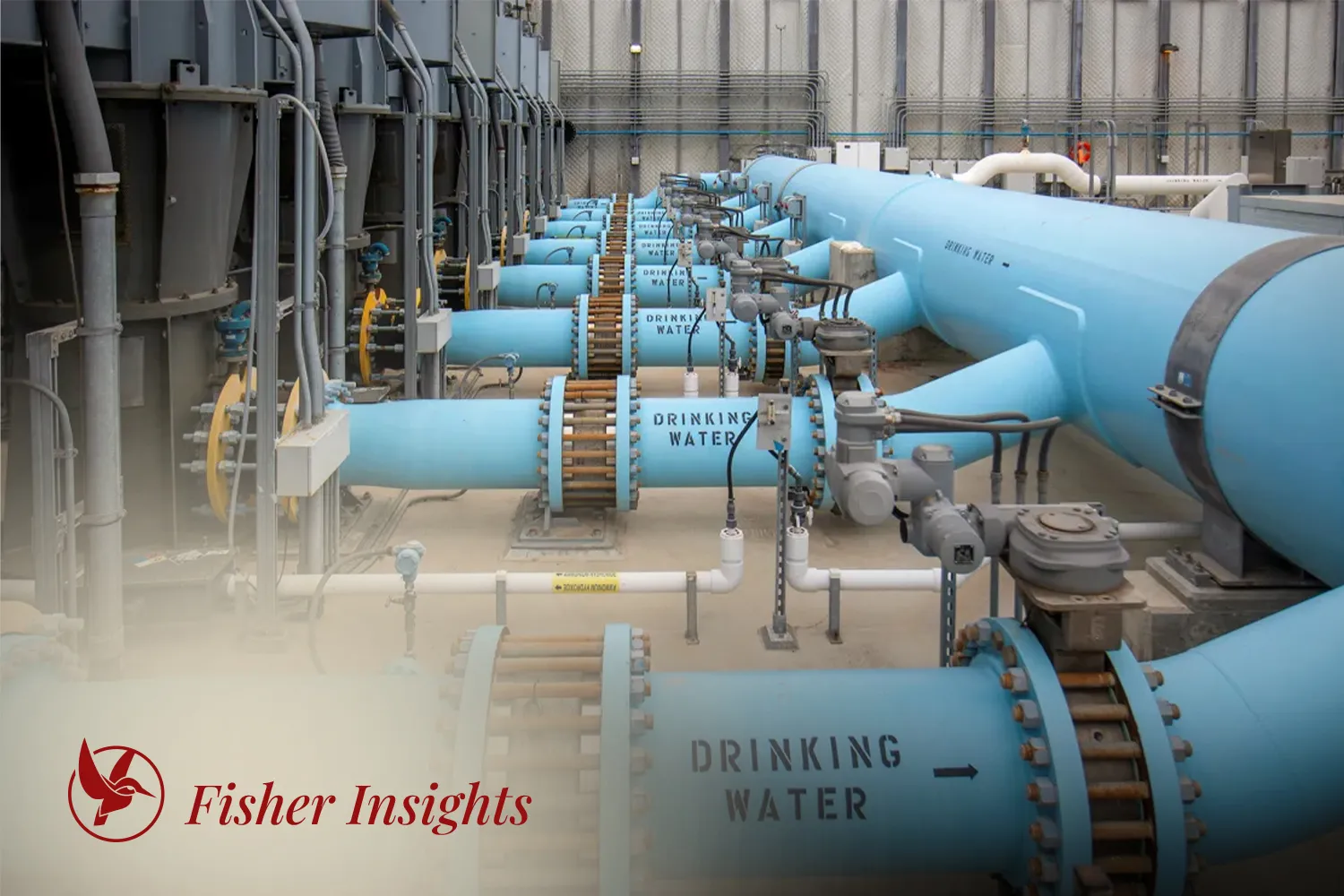
Water underpins every major sector driving the GCC's future, from manufacturing and energy to healthcare, tourism, logistics, and digital infrastructure. The region's reliance on desalination is nearly absolute, supplying between 42% and 90% of total water consumption across GCC countries, with approximately 100 million people depending on desalinated water for drinking (Enterprise AM, 2026).
Disruptions to water infrastructure have implications far beyond utilities. They can affect manufacturing output, cooling systems for data centers, industrial production, healthcare facilities, hospitality operations, and logistics networks. As climate and resource risks increasingly translate into business risks, water security is becoming a core component of enterprise resilience.
Equally important is the impact on an organization's workforce. Business continuity is ultimately about people. Resource-related disruptions can affect business operations, workforce productivity, workforce availability, and an organization's ability to maintain critical business functions. For employers operating across multiple sites or jurisdictions, resilience increasingly depends on workforce strategies that can adapt to resource-related disruptions through flexible operating models, crisis response planning, and effective business continuity measures.
This places HR alongside business leaders in building organizational resilience. As organizations expand across the GCC, workforce planning and business continuity planning can no longer be treated as separate disciplines. By integrating workforce planning, succession planning, crisis management, and business continuity into broader enterprise risk strategies, organizations will be better positioned to respond to evolving environmental and operational challenges while maintaining operational continuity.
Building Organizational Resilience
For business and HR leaders, integrating water considerations into enterprise risk management and long-term workforce planning is becoming increasingly important. Businesses that proactively assess water-related risks and support resource efficiency will be better positioned to maintain operational continuity, strengthen supply chain resilience, enhance workforce resilience, and remain competitive in an increasingly resource-constrained economy.
This is particularly relevant as investors, regulators, employees, and customers place greater emphasis on environmental resilience and responsible business practices. Organizations that view sustainability through the lens of business continuity rather than compliance alone will be better equipped to navigate future challenges.
Looking Ahead
As the GCC continues its economic transformation, water security will increasingly influence where businesses invest, how they manage risk, and how they support their people. While governments continue to strengthen regional water resilience, organizations must ensure their own strategies evolve alongside these developments.
Businesses that recognize water as strategic infrastructure rather than simply an environmental concern will be better positioned to protect their workforce, strengthen operational resilience, and sustain long-term growth. In an increasingly resource-constrained world, resilience will not only be defined by the strength of an organization's infrastructure, but also by its ability to safeguard the people who depend on it.
References:
Arab News. (2026, July 1). GCC cuts groundwater extraction as renewable water use rises. https://www.arabnews.com/node/2645624/business-economy
Enterprise AM. (2026, March 25). GCC water security emerges as a frontline risk amid ongoing regional war. https://enterpriseam.com/ksa/2026/03/25/gcc-water-security-emerges-as-a-frontline-risk-amid-ongoing-regional-war/
Kearney. (2026, May 11). Building water resilience in the GCC through economic cooperation. https://www.kearney.com/industry/energy/article/building-water-resilience-in-the-gcc-through-economic-cooperation
United Nations Economic and Social Commission for Western Asia. (2019). Moving towards water security in the Arab region. https://www.unescwa.org/publications/moving-towards-water-security-arab-region